ESCO Panel at Tower & Co. Global Hub 2026: What the Industry Is Discussing

The panel was moderated by Kieron Osmotherly, Founder & Managing Partner of Tower & Co. Speakers included Gabriel Bou Gebrael, GM – ESCO Division at IPT PowerTech; Oleg Kaplanian of CREI; Mike Darcy of Africa Mobile Networks; Bilal Qureshi of Brillanz Group; and Thibault Neveu of Cygnum Capital. The discussion was centred on how ESCO, TWESCO and NaaS models are being structured across different telecom markets and what happens when networks expand beyond their original plans.


Gabriel Bou Gebrael: Growth does not stop at the original contract
Gabriel brought IPT PowerTech’s experience of operating ESCO contracts across multiple markets into the discussion.
IPT PowerTech currently manages around 10,000 sites across seven countries under ESCO contracts. Gabriel explained that demand continues to come from both new operators and existing customers.
One of the examples he shared showed how quickly a project can change after the initial agreement. A project that was originally expected to add around 50 sites per year was later adding more than 200 annually. Another project grew from an expectation of 30–40 sites to more than 150.
The panel questioned the value of small ESCO pilots
Another specific discussion focused on Proofs of Concept.
Gabriel explained that IPT generally does not approach ESCO projects through small PoCs. Its contracts often cover the network from the start, meaning operational complexity is taken on immediately.
Oleg Kaplanian agreed, explaining that a small PoC may not provide enough scale to justify mobilisation or secure the financing needed for an ESCO project.
For the panel, this was an important distinction: an ESCO project needs sufficient network scale for the commercial and financing model to work.
Thibault Neveu brought the investor's view
The conversation then moved to bankability and risk.
Thibault Neveu of Cygnum Capital said the company had arranged more than $500 million across 15 countries in the ESCO sector. He highlighted changes in how financial and operational risks are being allocated between MNOs, ESCO platforms and investors.
Foreign exchange was one of the biggest issues.
Operators are increasingly looking at local-currency contracts, while international investors typically require returns in dollars or euros. The panel also discussed narrower early-termination guarantees and fewer routes for recovering invested capital.
Mike Darcy offered a different approach. AMN often uses revenue-share structures, which can provide a way for the value of the contract to move with local telecom revenues.
4G and 5G upgrades were another major concern
The discussion then turned to something happening across existing networks: power upgrades for 4G and 5G equipment.
Gabriel highlighted that CapEx for upgrading existing sites has recently been higher than CapEx for new sites. He noted that a single upgrade cycle can affect 40% to 60% of an entire network.
Oleg pointed out the pressure this creates for tower companies. Higher network loads can require additional battery capacity and other power upgrades, while the tower company still needs to fund that infrastructure.
The panel discussed how ESCO providers can become part of that solution rather than simply being viewed as another supplier.
Mike Darcy connected energy costs with rural coverage
Mike Darcy, CEO of Africa Mobile Networks, brought the rural market into the discussion.
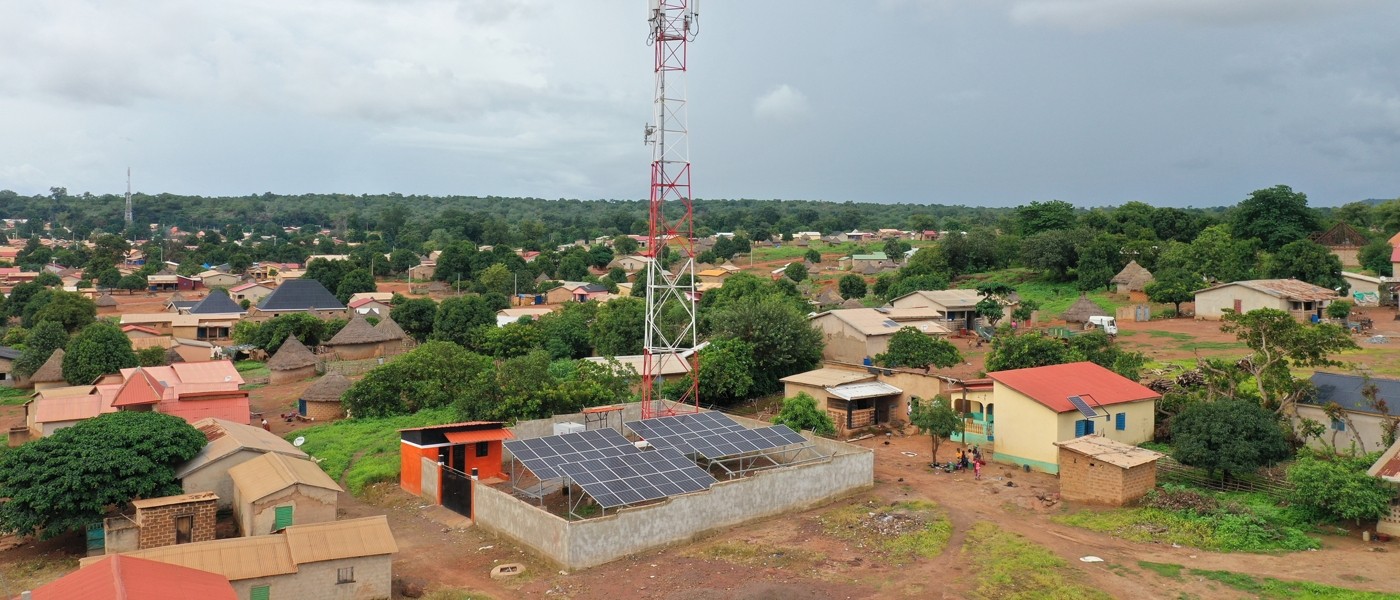
AMN operates approximately 5,500 rural base stations across 12 networks, using a power-efficient network design supported by solar and batteries.
Mike explained that reducing the cost of operating a rural site can change the economics of where networks can be deployed. During the discussion, he gave a potential population threshold of approximately 500–1,500 people, depending on the country and ARPU.
That linked the energy discussion directly to the question of which communities can be connected commercially.
ESG was discussed through measurable outcomes
The panel also looked at ESG requirements and how they are being incorporated into telecom contracts.
Gabriel highlighted IPT PowerTech’s work around ESG disclosures and targets aligned with the Science Based Targets initiative (SBTi). He noted that MNOs are increasingly including environmental performance KPIs and carbon metrics in their SLAs.
Another point raised during the session was diesel displacement. Salman Khalili of Brillanz Group explained how replacing imported diesel can be measured not only through emissions avoided but also through the foreign-currency expenditure that a country avoids.
What the panel left the industry with
The Tower & Co. ESCO session was ultimately a discussion about the mechanics behind telecom energy projects.
The speakers addressed network growth, financing, currency exposure, contract structures, existing-site upgrades, rural connectivity and ESG measurement rather than treating ESCO as a single solution.
For IPT PowerTech, Gabriel Bou Gebrael’s contribution brought the experience of managing thousands of ESCO sites into that discussion. His examples showed how network requirements can grow well beyond an original RFP, while the wider panel demonstrated why financing, asset ownership and energy performance have become closely connected.
For the tower and telecom professionals in the room, the discussion offered a practical view of where ESCO models are being used today — and the commercial questions that need to be answered as networks continue to grow.